
Moving Tools and Equipment That Make Your Move Easier (Australia, 2026)
The tools that make a move easier are not the drill and the hammer. They are a written list, a trolley, a set of lifting straps, a stack of moving blankets, and a pair of boots that protect your toes. Lifting injuries are the most common serious injury claim in Australia, so the kit that saves your back matters more than the kit that hangs a picture. If you book a removalist, the heavy equipment turns up on the truck.
Here is the number that should decide what goes in your moving kit. Body stressing, which is mostly lifting, carrying and pushing, accounted for more than a third of all serious workers' compensation claims in Australia in 2023-24 (Safe Work Australia, Key Work Health and Safety Statistics 2025). Professional crews with the right equipment still get hurt doing this. A family with a borrowed ute and no trolley is not better placed.
Most "moving tools" articles list a screwdriver and a Swiss Army knife and stop. This one starts with the piece of paper, moves on to the trolley, and finishes with your feet.
Start with paper: the tool nobody lists
A written list is the most useful moving tool you own, and it costs nothing. A move is a few hundred small decisions made while tired, and paper remembers them so you do not have to.
Three pieces of paper do most of the work:
- The box list. Number every box on two sides as you seal it, and write a one-line contents note against that number on a single sheet. "Box 14: kitchen, glasses, the good jug." When the truck is unloaded you tick numbers off instead of counting boxes and hoping.
- The floor plan. A rough sketch of the new place with each room named, taped to the wall inside the front door. Every box and piece of furniture carries a room name, and the crew never has to ask. This is the single biggest time-saver on an hourly move.
- The day sheet. Keys, meter readings, the removalist's number, the new address, who is collecting the kids, where the kettle box is. One page, on the fridge, then in your pocket.
Two marker pens (one spare, because one always walks off), a roll of coloured tape or dot stickers for room colours, and a phone are the rest of the "paper" kit. Photograph the back of the TV and the modem before you unplug them, and photograph any furniture with an existing mark before the crew touches it. Both photos have settled arguments.
Our packing tips guide covers the labelling method in more detail.
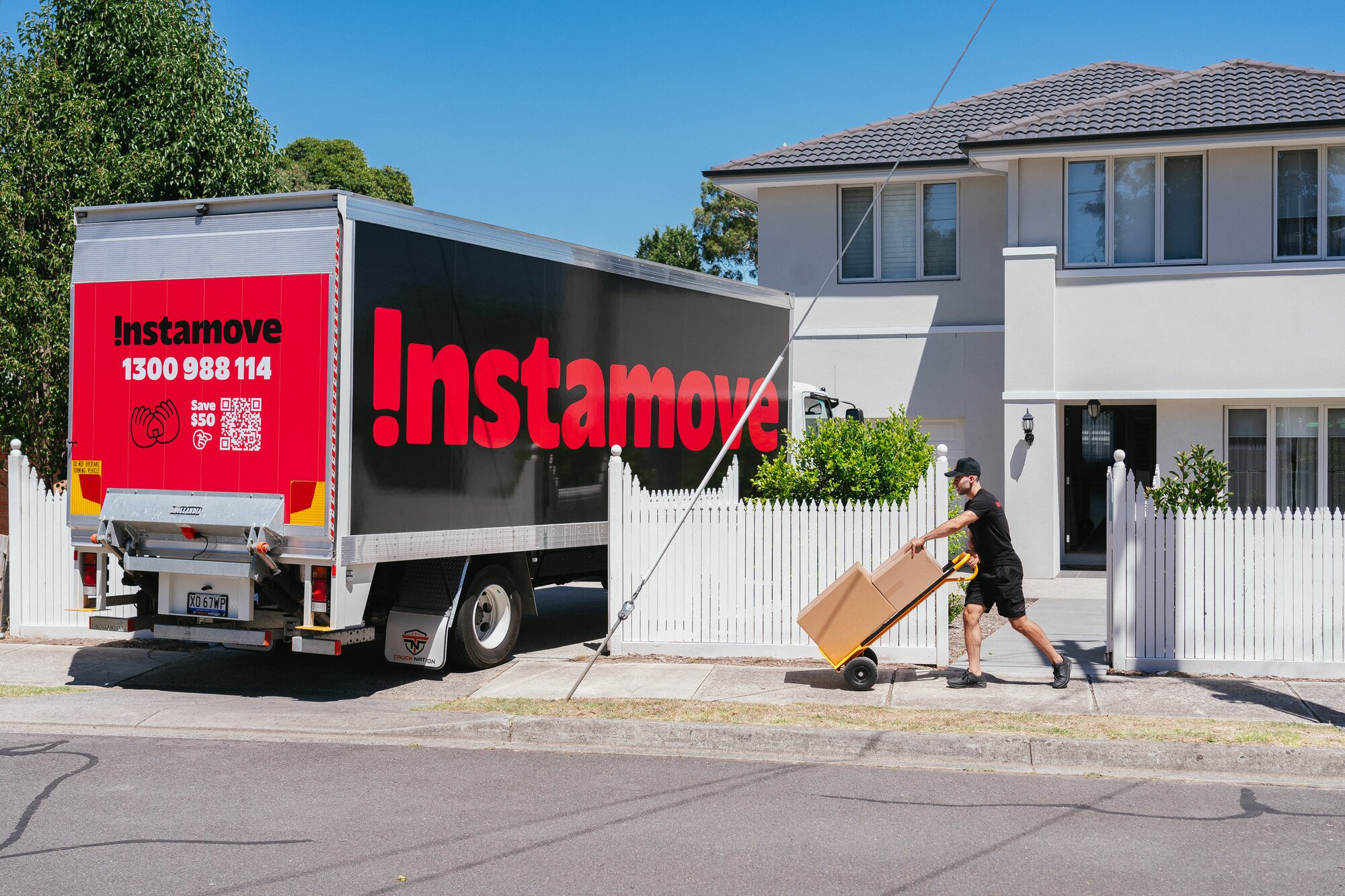
The moving trolley: the one piece of equipment that changes the day
A moving trolley turns a two-person carry into a one-person roll. If you only borrow or hire one thing for a self-move, make it this.
There are three kinds, and they are not interchangeable:
| Trolley | What it is | Best for | Not for |
|---|---|---|---|
| Hand trolley (hand truck) | Upright, two wheels, a toe plate at the bottom | Stacked boxes, fridges, washing machines, filing cabinets, anything tall and heavy | Wide flat items, long carpet runs, stairs without a second person |
| Furniture dolly (platform trolley) | Low flat platform on four swivel castors | Sofas, dressers, tables, anything you can rest flat and push | Stairs, gravel, anything that overhangs the platform badly |
| Stair-climbing trolley | Hand trolley with tri-star wheels or a powered track | Apartments with no lift, split-level homes | Anyone who has not used one before with a heavy load |
The hand trolley is the workhorse. Tip the load toward you so the weight sits over the axle, keep the stack no higher than your chest so you can see, and strap the load to the frame if it is more than a couple of boxes tall. On a ramp, go down backwards with the load below you. The stair-climber is a specialist tool; if you have stairs and heavy furniture, this is where the crew earns their money.
Stairs are more common than people think. Across our Instamove moves in the year to 27 September 2026, we allowed additional timing for pickup or dropoff based on stairs on 10% of jobs.
Hire or buy? Bunnings and most equipment-hire yards hire hand trolleys and dollies by the day, and a basic hand trolley is cheap enough that many people simply buy one and keep it. If you have booked a removalist, do not hire anything: the trolleys, dollies and straps are on the truck and included in the hourly rate.
Straps, sliders and blankets: the professional's kit
Every removalist's truck carries the same four things because they are the difference between a clean move and a chipped doorframe. A self-mover can borrow or buy all of them.
| Item | What it does | When it earns its keep | Watch out for |
|---|---|---|---|
| Lifting straps (shoulder or forearm straps) | Two people share a load through straps under the item, lifting with legs and shoulders rather than hands and back | Fridges, washing machines, wardrobes, mattresses on stairs | Both people must be similar height, and they do not replace a trolley on long carries |
| Ratchet or cam straps | Lock the load to the trolley or to the truck wall | Every truck load, every trolley stack over two boxes | Over-tightening on soft furniture crushes it; use a blanket under the strap |
| Furniture sliders | Felt or hard-plastic pads under legs let a heavy piece glide | Timber, tile and vinyl floors; repositioning furniture in the new place | Felt on carpet does nothing; use the hard-plastic side. Never use on stairs |
| Moving blankets (removalist pads) | Thick quilted pads wrapped and taped around furniture | Every timber, glass and painted surface; stacking pieces in the truck | Cheap thin ones slip. Tape the blanket, never the furniture |
Sliders are the underrated one. A wardrobe on hard-plastic sliders can be pushed across a floorboarded hall by one person, and they are the tool that lets you rearrange a room in the new place without lifting anything twice.
Blankets are the tool people skip and regret. A dozen is a reasonable number for a two-bedroom home. For the pieces that need more than a blanket, our guide to moving a fridge, TV and fragile items covers the wrapping.
The hand tools you actually need
The competing guides get this part roughly right, so here is the short version. The aim is one small toolbox that stays open until the last minute and rides in your car, not in the truck.
- Drill driver with a bit set, including the square and hex bits that flat-pack furniture uses. This is the tool for disassembly the night before and reassembly the night after.
- Allen keys. Every flat-pack bed and bookcase came with one, and every one of them is now lost. A cheap set solves it.
- Adjustable spanner and a multi-bit screwdriver for bed frames, table legs and washing machine transit bolts.
- Zip-lock bags and a marker. Every screw and bracket from a disassembled piece goes in a bag, labelled, and taped to the piece itself. Not in a "screws" box. This one habit saves more time on unpack day than any tool.
- Box cutter with spare blades, scissors and a tape gun. A tape gun is the difference between sealing forty boxes in an hour and in an afternoon.
- Measuring tape. Measure the fridge, the sofa and the wardrobe, then measure the new doorways, the stairwell turn and the lift. Do it before moving day, not while the crew is holding the sofa.
- Step ladder, torch or head torch, extension lead and a power board. The new place will have no working light in at least one room and no reachable power point where you need it.
- Hammer, a few picture hooks and a small spirit level for the first evening, when hanging one picture makes the place feel like yours.
For the boxes and tape themselves, see what moving boxes cost in Australia or order an Instamove move pack delivered to the door.
Safety equipment: boots, gloves and the two-person rule
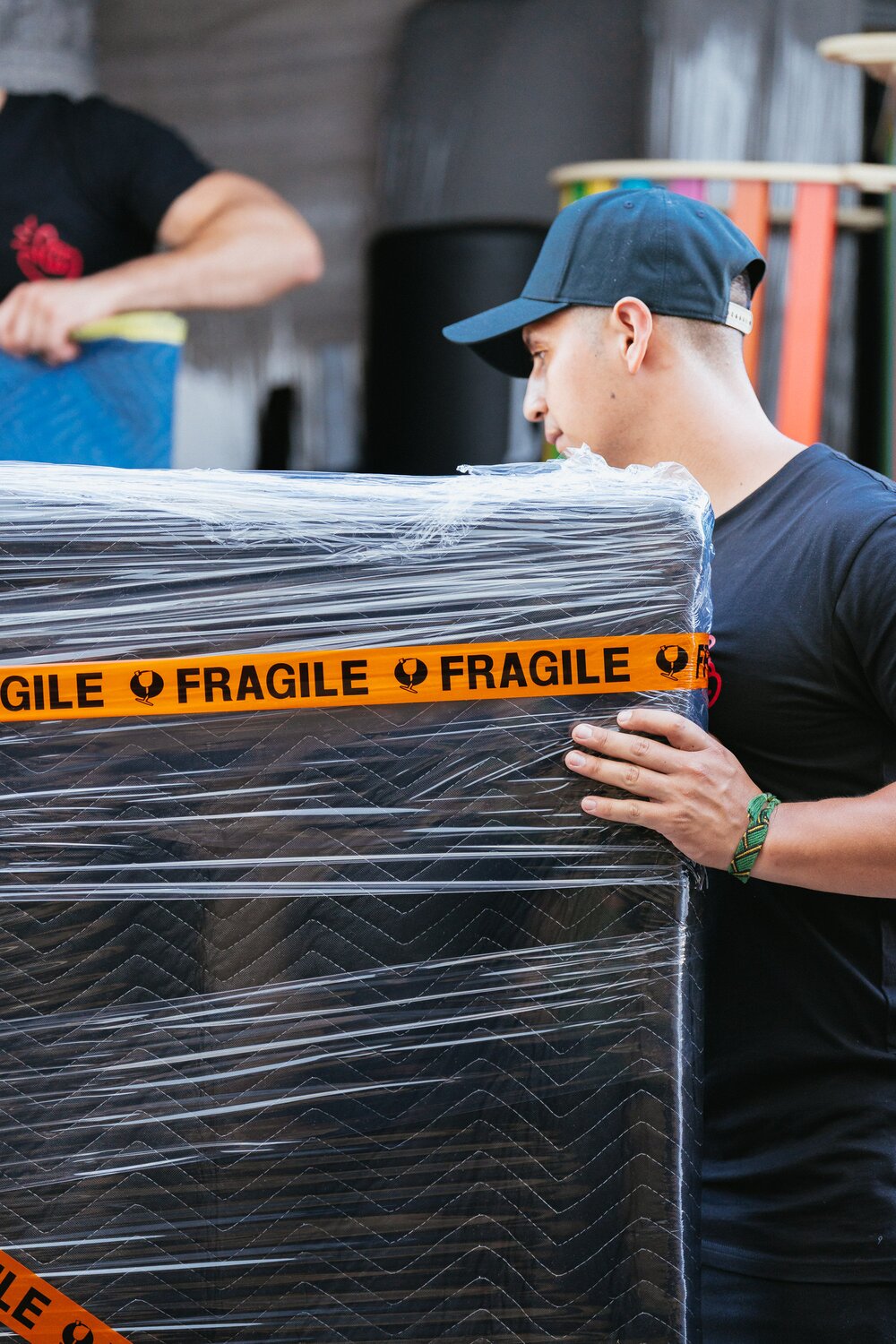
Moving day is a manual-handling job, and the injuries are the same ones tradespeople get: crushed toes, torn hands, and backs that go on the last box. Dress for it.
Steel cap boots. A dropped bookcase or a slipped fridge lands on feet, and thongs and runners offer nothing. Safety footwear sold in Australia and New Zealand is certified to AS/NZS 2210.3, which requires the toe cap to withstand a 200 joule impact and 15 kilonewtons of compression, roughly a 20 kilogram weight dropped from one metre. Composite toe caps meet the same standard and weigh less. If you are doing any of the lifting yourself, wear them.
Gloves. Rubber-palmed rigger or grip gloves, not gardening gloves. They protect against splinters, staples and box-cutter slips, and they stop a sweaty hand losing a washing machine.
The two-person rule. Anything you cannot lift comfortably alone gets two people, a trolley or straps. There is no legal maximum lifting weight in Australia; Safe Work Australia's model code of practice on hazardous manual tasks asks employers to reduce the risk instead, and the same logic applies at home. Bend the knees, keep the load close, turn with your feet rather than your spine, and never twist while carrying.
The rest of the safety kit:
- A basic first aid kit in the car, mainly for cuts and splinters.
- Sunscreen, hat and water. Trucks are loaded in driveways, and an Australian driveway in January is a work site.
- Clear walkways. Rugs rolled, cords taped down, kids and pets somewhere else. Falls, slips and trips are the second most common serious claim mechanism behind body stressing (Safe Work Australia, 2025).
- Doorstops or a wedge for every door on the route, so nobody carries a wardrobe into a closing door.
What is on a professional removalist's truck
If you have booked a crew, most of this page arrives with them. It is worth knowing what "equipped" means, partly so you can check, and partly so you can leave the right things alone.
A standard Instamove truck carries hand trolleys and furniture dollies, lifting and ratchet straps, a protective mat, a stack of removalist blankets, tie-down rails inside the truck, a basic tool kit for disassembly and reassembly, and a crew in safety boots and gloves.
What that means for you
- Do not hire equipment for a booked move. It is on the truck and included.
- Do disassemble what you can the night before, with the screws bagged and taped to the piece. Time on an hourly move is money.
- Do clear the route and stage boxes near the door. Across 741 confirmed Instamove bookings in August 2026, 88% of moves stayed within the same state, and local moves are priced by the hour. Every minute the crew spends hunting for a box or squeezing past a hall table is on your bill.
- Leave the big lifts to the crew. They are trained, equipped and covered for them. For the plan that gets the most out of a crew's time, see how to save time on your furniture move.
Where possible, book your removalist a few weeks out, but if you are closer than that, don't panic. Instamove runs a large fleet and holds good last-minute availability, including same-day and emergency moves.
The moving day essentials box
Not equipment, but the box every mover ends up wishing they had packed. It rides in your car, it is the last thing out of the old place and the first thing into the new one, and it is labelled "OPEN FIRST" on every side.
| Category | What goes in |
|---|---|
| Paper and keys | The day sheet, both sets of keys, lease or settlement documents, ID, the removalist's booking |
| Kitchen | Kettle, mugs, tea and coffee, a sharp knife, a chopping board, tea towels, snacks, a bottle of water each |
| Bathroom | Toilet paper, hand soap, a towel each, toothbrushes, any medication |
| Cleaning | Bin bags, multipurpose spray, cloths, a dustpan, paper towel |
| Power | Phone chargers, a power board, an extension lead, a torch, spare batteries |
| First night | Bedding for each bed, pyjamas, one change of clothes, a phone charger per person, something for the kids to do |
| Tools | The small toolbox from the section above, the box cutter, the marker pens |
Pack it the day before, not on the morning. The morning is for the crew.
Hire, buy or let the crew bring it
The right answer depends on how you are moving.
| Your move | Trolley and straps | Blankets and sliders | Hand tools | Safety boots |
|---|---|---|---|---|
| Booked removalist | On the truck. Do not hire | On the truck. Sliders worth owning for the new place | Own a small kit for the night before and after | Only if you are lifting anything yourself |
| Self-move with a hired truck or ute | Hire a hand trolley for the day, or buy a basic one | Hire or buy a dozen blankets; buy sliders | Own the full kit | Yes, for everyone lifting |
| Moving a few items | Buy a folding hand trolley; it earns its keep for years | Two or three blankets from the boot | The basics | Yes if a fridge or washer is involved |
FAQ
What equipment do you need to move house?
For the lifting: a hand trolley, a furniture dolly if you have large flat pieces, lifting straps, ratchet straps, furniture sliders and a dozen moving blankets. For the paperwork: a numbered box list, a floor plan of the new place, marker pens and a phone camera. For safety: steel cap boots and grip gloves. A booked removalist brings the lifting equipment on the truck.
What is the best trolley for moving house?
A two-wheel hand trolley with a wide toe plate handles stacked boxes, fridges and washing machines and is the one to hire or buy first. Add a low four-castor furniture dolly for sofas, dressers and tables on flat floors. Stair-climbing trolleys exist but take practice; if you have stairs and heavy furniture, that is the job for a professional crew.
Do I need steel cap boots to move house?
If you are lifting or carrying anything heavy, yes. Safety boots certified to AS/NZS 2210.3 protect toes against a 200 joule impact, roughly 20 kilograms dropped from one metre, which is about what a slipped box or a tipped bookcase delivers. Composite-toe boots meet the same standard and are lighter. If a crew is doing all the lifting, sturdy closed shoes are enough.
Do removalists bring their own equipment?
Yes. A professional crew arrives with trolleys, dollies, lifting and ratchet straps, removalist blankets and a basic tool kit, and the cost is included in the hourly rate on a local move. There is no need to hire anything. What helps is the things only you can do: disassemble furniture, bag and label the screws, clear the route and stage boxes by the door.
Do furniture sliders work on carpet?
Felt sliders do not; they are made for hard floors. On carpet you need the hard-plastic side down, which lets the piece glide over the pile. Sliders are for pushing across a floor, never for stairs or thresholds. They are most useful in the new place, where they let one person reposition a wardrobe or sofa without a second pair of hands.
How many moving blankets do I need?
Around a dozen for a two-bedroom home covers the big timber, glass and painted pieces: bed heads, dining table, dresser, TV, mirrors and the fridge. Wrap the item, then tape the blanket to itself, never to the furniture. If you have booked a removalist, blankets are on the truck and you do not need to buy any.
What should be in a moving day essentials box?
Keys and documents, a kettle and mugs, toilet paper and soap, a towel each, medication, phone chargers and a power board, a torch, bin bags and cleaning spray, first-night bedding and a change of clothes, snacks and water, and the small tool kit. Pack it the day before, carry it in your own car, and label it "OPEN FIRST" on every side.
Is it cheaper to hire moving equipment or book a removalist?
For a full house move, a removalist is usually the better value once you count truck hire, equipment hire, fuel, a day of your own time and the risk of injury. Body stressing is the most common serious injury claim in Australia. For a few items across town, a folding hand trolley and a mate's ute can be the right call. Either way, the paper kit and the essentials box are free.


