
Moving with plants in Australia
How to get your greenery there alive and legal
Two things decide whether your plants make the move: whether your removalist will carry them, and whether your destination state will let them in. Most removalists exclude plants from their damage cover, so plants usually travel in your own car. Interstate, plants are also expensive, because a pot on the truck floor is charged as a full-height column of space rather than as its own volume. Every state sets its own biosecurity rules and you must check the state you are moving to, not the one you are leaving. Tasmania is the strictest.
An interstate move takes two to seven days in transit: as little as two days on a short route like Melbourne to Sydney, and up to seven on longer runs or shared loads, according to Instamove's interstate removals guide. That is the number that reframes this whole topic. Your fiddle-leaf fig is not facing a 40-minute drive across town. It is facing up to a week in a dark, sealed truck, and possibly a border inspection at the end of it.
Most guides to moving with plants skip straight to bubble wrap and watering schedules. Useful, but it is the wrong order. Sort out who is carrying the plants and whether they are legally allowed to arrive, then worry about the potting mix.
The two questions to answer first
Before you prune a single leaf, answer these:
- Who is physically carrying the plants? The removalist, or you in the back of the car? This changes everything about how you pack them.
- Are they allowed into your destination state? Interstate borders have real biosecurity rules, real inspections, and on-the-spot fines. This is not a formality.
Most people discover both answers a week out, when it is too late to do anything sensible about either. Ten minutes now saves the monstera (a popular tropical climbing plant).
Will your removalist actually take your plants?
Usually not, and the reason is worth understanding rather than resenting.
Plants are living, unsecured, top-heavy and impossible to pack safely alongside furniture. They leak soil and water onto upholstery. They cannot be stacked. And in a long-haul truck they sit in the dark, in heat, for days. No amount of careful handling changes that.
So most removalists, Instamove included, exclude pot plants from their accidental damage cover. Ours are listed as an exception in our published Terms and Conditions, alongside items that are inherently fragile or susceptible to damage however carefully they are handled. We will still move them if you ask, at your own risk, but we will not pretend they are covered.
That honesty matters more than it sounds. A removalist who quietly agrees to take your plants and says nothing about cover has not solved your problem, they have just moved it.
The bit that surprises people: interstate, a plant is charged by the column, not the pot
This is the single most useful thing on this page if you are moving interstate, and almost nobody explains it.
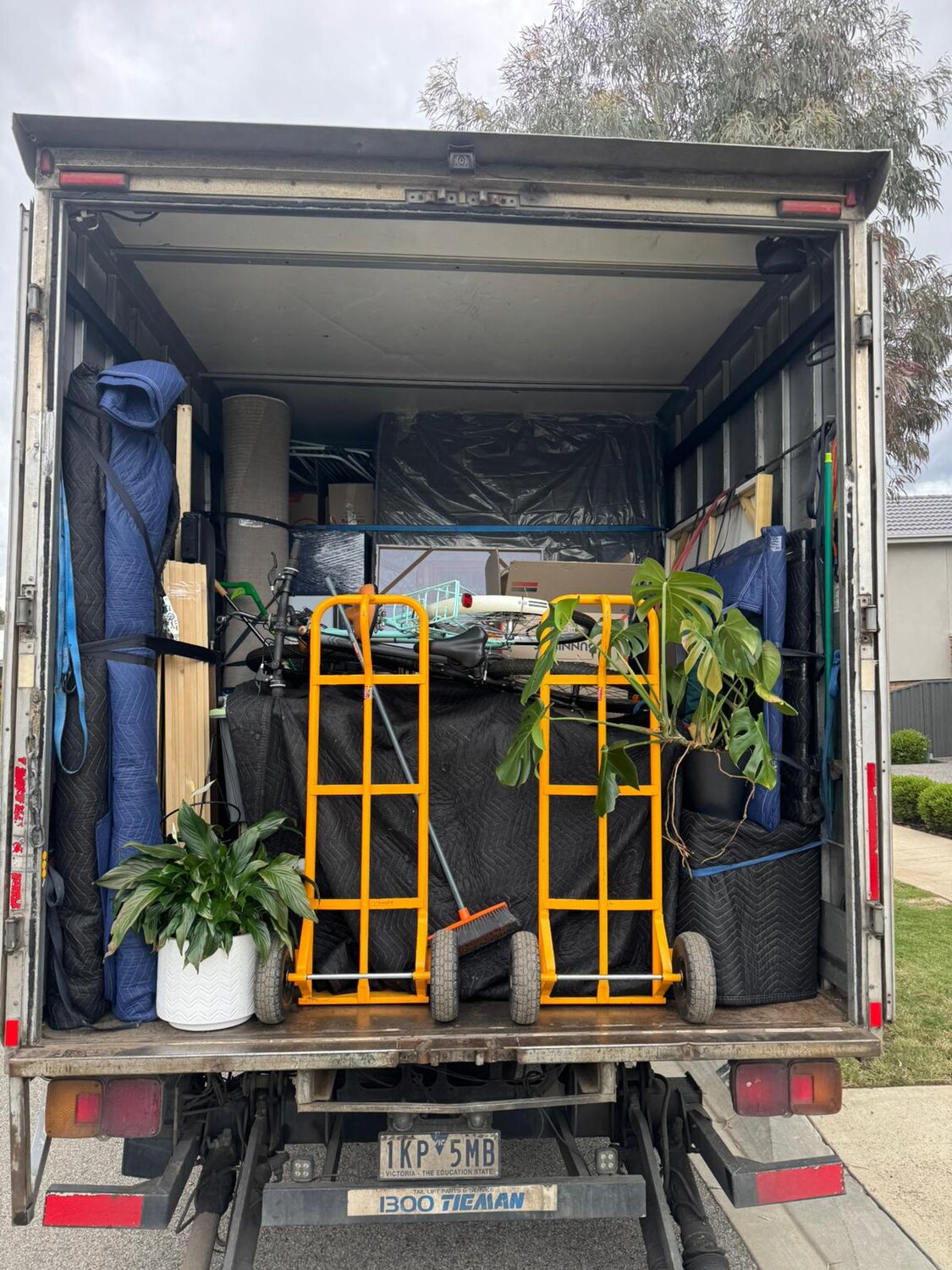
Interstate moves are priced by cubic metre. A plant has to travel on the floor of the truck, because that is the only place it is stable and the only place it will not be crushed. But a plant cannot be stacked on. Nothing goes on top of it, and nothing goes beside it that might tip into it.
So the space your plant actually consumes is not the size of the pot. It is the floor area of the pot multiplied by the full internal height of the truck, from the deck to the roof. A knee-high ficus that looks like a small item to you is, to the person loading the truck, a column of unusable space running all the way up.
That is why a customer can be genuinely shocked by what three or four pot plants add to an interstate quote. The removalist is not being difficult, and it is not a penalty for plants. It is that the plants have taken a chunk of the truck out of circulation, and on a long-haul run the truck is the thing being sold.
How to get in front of it:
- Ask for the plants to be priced separately when you get the quote, not added at the door. Any decent mover can tell you the difference.
- Ask whether there is spare capacity on your run. If the truck is not going out full, the cost of the column is much lower, and it may be waived entirely. We run a large fleet, so on many routes there genuinely is room. It costs you nothing to ask.
- Consider a backload. Shared and consolidated loads are the cheapest way to move bulky, awkward things interstate, and plants are the definition of bulky and awkward.
- Group them. Six small pots clustered into one crate consume one column. Six small pots scattered across the deck consume six.
- Or just take them in the car, which is what this whole page keeps coming back to, and which now has a price attached to it.
What this means in practice:
- For a local move, put plants in your own car and take them last, or drop them at the new place first.
- For an interstate move, plan on driving the ones you truly cannot lose, and be realistic about the rest.
- If you are flying to your new city, your plants are not coming with you in the cabin. Start the plan B conversation early.
Interstate rules: check the state you are moving to
Here is the single most misunderstood point on this topic. Biosecurity rules are set by the destination state, not by the federal government and not by the state you are leaving. If your route crosses more than one border, you need to check each one.
Plant quarantine entry conditions apply to nursery stock, plants, flowers, seeds and soil, according to Australian Interstate Quarantine, the national body coordinating domestic plant quarantine. Travellers can face on-the-spot fines for taking prohibited items across borders.
The table below is where to start for each state and territory. Call the destination regulator, describe your actual plants, and ask what applies.
| Moving to | Regulator | Phone | Read the rules | What to ask about |
|---|---|---|---|---|
| Victoria | Agriculture Victoria | 136 186 | Moving plants and plant products: householders | Entry conditions for your plant, and whether a Plant Health Certificate applies |
| New South Wales | NSW Department of Primary Industries and Regional Development | 1800 084 881 | Movement conditions for plants, plant products and related items | Which movement zone your destination sits in, and whether your plant is listed |
| Australian Capital Territory | ACT Biosecurity | 02 6207 3587 | Plant quarantine | Whether a Plant Health Certificate is needed for what you are bringing |
| Queensland | Department of Primary Industries | 13 25 23 | Restrictions on moving plant material, soil and related equipment into Queensland | Fire ant zones, and the commodity restrictions that apply to your state of origin |
| South Australia | PIRSA | 1300 666 010 | Travelling with plants | Fruit fly conditions, Riverland zone, Plant Quarantine Standard |
| Tasmania | Biosecurity Tasmania | 1300 368 550 | Plants and plant products | Notice of Intention, the soil-free requirement, Myrtaceae |
Two notes on that table. The ACT runs its own biosecurity regulator, with its own phone line and its own Plant Health Certificate form, so it is not covered by ringing NSW. And the Victorian page above is the householder version deliberately: Agriculture Victoria also publishes a Plant Quarantine Manual, but it is a searchable database of numbered conditions written for growers and inspectors, and it will not help you work out what to do with a fiddle-leaf fig.
There is also a national freecall quarantine hotline, 1800 084 881, open business hours Monday to Friday. If you only make one call, make it that one.
Western Australia and the Northern Territory apply their own, stricter conditions. Both sit outside Instamove's service area, so we have left them off the table rather than give you second-hand information about a move we cannot help with.
First, work out what your plants actually are
Here is the practical catch nobody warns you about: the rules are written in botanical Latin, and your plants are not.
Tasmania does not ban "gum trees", it bans the family Myrtaceae. Declared weed lists name species, not nicknames. So before you can check a single rule, you need the botanical name of the thing sitting in your hallway, and "the big spiky one from Mum's place" will not get you an answer from a biosecurity officer.
A free plant identification app does that job in about ten seconds.
| App | Cost | Who is behind it | Best for |
|---|---|---|---|
| PlantNet | Free, no subscription, works offline once installed | Cirad, INRA, Inria and IRD, French public research institutes | Getting the botanical name fast, and filtering results by genus or family |
| Seek, and iNaturalist | Free, and Seek needs no account | Not-for-profit. The Atlas of Living Australia runs the Australian node of iNaturalist | A second opinion, and having real Australian naturalists confirm or correct the identification |
Our pick for this particular job is PlantNet. It gives you the scientific name rather than a vague common one, it lets you filter what you are looking at by genus or family, which is exactly the check you need for the Myrtaceae question, and it is genuinely free rather than free for seven days. Photograph the leaf, then the flower or fruit if there is one, then the whole plant. More angles, better answer.
Where the answer really matters, get a second opinion on iNaturalist, where actual naturalists review submissions rather than an algorithm working alone.
No app, no app store, no patience? Photograph it and ask an AI chatbot. Take a clear photo of the leaf and, if there is one, the flower, then upload it to whichever assistant you already use, ChatGPT, Claude, Gemini or Copilot, and ask "what plant is this, and what is its botanical name and family?" It costs nothing, needs no download, and it is a genuinely good fallback for the one plant in the hallway you cannot name.
Two things make that answer much better. Tell it where you are ("this is growing in a pot in Melbourne"), because it narrows the field enormously. And ask it directly whether the plant is in the Myrtaceae family, since that is the question Tasmania actually cares about.
The same caveats below apply, and one more: a chatbot will give you a fluent, confident answer whether or not it is right. Treat it as a starting point, cross-check anything surprising against PlantNet or iNaturalist, and never hand a chatbot's answer to a biosecurity officer as though it were settled.
Two honest caveats, because this is the bit that trips people up:
- These models lean towards northern hemisphere flora, and a great many Australian natives grow nowhere else. A confident match on a monstera means more than a hesitant match on a native shrub. If the app hedges, treat it as a maybe.
- No app is a biosecurity ruling. The app tells you what you have. The regulator tells you whether it can come. Use the botanical name as the thing you hand over on the phone, not as your final answer.
One more thing worth knowing: several popular plant ID apps open with a short free trial that quietly rolls into a subscription. You do not need to pay anything for this job.
Tasmania is the strict one
If you are moving to Tasmania, treat plants as a genuine project rather than an afterthought. Biosecurity Tasmania's requirements are specific and they are enforced.
- Soil is the problem, not the plant. Tasmania defines nursery stock as plants in soil-free potting media, and that definition explicitly includes household pot plants. Garden soil has to go.
- You must lodge a Notice of Intention to Import Plants or Plant Products, submitted 24 hours before arrival.
- Inspection on arrival is required. Not discretionary.
- Myrtaceae are not permitted. That family covers eucalypts, bottlebrush, tea tree, lilly pilly and paperbark, because they host myrtle rust. If you were planning to bring a potted lilly pilly, you are not.
- Household moves need a separate form, the Declaration for the Movement of Unaccompanied Personal Effects into Tasmania.
- Timber and bark have their own rules. Bark must be removed completely, and wood must be clean of leaves, leaf litter and soil.
None of that makes it impossible. It makes it a fortnight of preparation instead of an afternoon.
South Australia, fruit fly, and the roadblocks
South Australia enforces fruit fly quarantine harder than most people expect, and it applies to fruit and fruiting vegetables as much as to ornamental plants.
If you are caught with fruit or fruiting vegetables illegally at the Yamba Quarantine Station you will be fined, according to PIRSA, and a zero tolerance approach also applies at random quarantine roadblock operations across the state. Inside South Australia, the Riverland has its own conditions, and the old "bring a receipt" exemption stopped being recognised on 29 July 2021.
The practical version for someone moving house: if you have a lemon tree in a pot, a chilli plant on the balcony or a bowl of fruit in the car, deal with it before the border rather than at it. There are quarantine bins at domestic airports, ferry terminals and state and quarantine zone borders. Eat it or bin it.
Preparing your plants: a two-week run
Work backwards from moving day. This is the schedule that actually holds.
- Two weeks out, identify your plants and call the destination regulator. Get the botanical name of anything you are unsure about, then confirm what applies. Do this first, because the answer may change what you bother preparing.
- Repot anything going interstate into fresh commercial potting mix, and into lightweight plastic rather than terracotta or ceramic. Heavy pots crack, and garden soil is the thing most likely to be refused at a border.
- Prune back dead growth and check thoroughly for pests. A plant carrying scale or mealybug is both a border risk and a way to infect everything else in the car.
- One week out, stop feeding them. Fertiliser encourages tender new growth, which is exactly what bruises in transit.
- Two days out, water deeply, then leave them alone. Wet soil in a moving box means root rot and a mess in your boot.
- The day before, box them. Sit each pot in a box lined with newspaper, wedge the gaps with scrunched paper so nothing slides, and leave the top open for air. Never tape a plant into a sealed carton.
- On moving day, load them last and unload them first, in the footwell or boot of your own car, out of direct sun. On a hot day, the car cabin is safer than the boot.
What to do with the plants that cannot come
This is the section most guides avoid, and it is the one most people actually need. Some plants will not make the trip: too big, too heavy, prohibited at the destination, or simply not worth a three-day truck journey.
Deciding early is kinder than deciding in a panic on the last morning.
- Rehome them properly. Neighbours, colleagues, your local buy-nothing or plant-swap group. Give them away a week early so you are not carrying pots at 9pm the night before.
- Take cuttings instead of the whole plant. For anything sentimental, a cutting in water travels in a lunchbox and skips most of the problem. A grandmother's hoya can arrive as three cuttings rather than one enormous pot.
- Ask the incoming owners or tenants. Established garden plants and big outdoor pots are often welcome, and it saves you a trip to the tip.
- Photograph the garden before you go. Not practical advice, exactly, but people regret not doing it.
If you are moving interstate and the cost of the truck is what is making the decision for you, a backload, where your load shares a truck already running your route, is usually the cheapest way to move the bulky things you were about to abandon. It buys you flexibility on dates rather than on what you keep.
Settling them in at the other end
Unpack the plants before the furniture. They have been in the dark, and every extra hour in a box costs them.
Give them a spot with similar light to the one they left, then leave them alone for a fortnight. Some leaf drop and a bit of sulking is normal and is not a sign you have killed anything. Resist the urge to fix it with water and fertiliser, which is how most post-move plants actually die.
Hold off on feeding for two to four weeks until you see new growth. Then repot anything you moved in a temporary plastic pot back into something you like looking at.
If you are moving with pets as well as plants, check which of your greenery is toxic before you rearrange the house. Our guide to moving interstate with pets covers the animal side of the same problem.
Frequently asked questions
Can you take pot plants interstate in Australia?
Usually yes, but it depends on the destination state and the specific plant. Every state and territory sets its own plant quarantine entry conditions, and some plants, soil types and plant families are restricted or prohibited. Check with the destination state's regulator before you pack, or call the national quarantine hotline on 1800 084 881. Travellers can face on-the-spot fines for taking prohibited items across a border.
Will removalists move plants?
Most will carry them if you ask, but almost none will cover them for damage. Plants are typically excluded from a removalist's accidental damage cover because they are living, top-heavy and impossible to secure like furniture. Instamove lists pot plants as an exception in our published Terms and Conditions. For anything you would be upset to lose, drive it yourself.
Why do plants add so much to an interstate removal quote?
Because interstate moves are priced by cubic metre, and a plant costs a whole column of the truck rather than the volume of its pot. Plants travel on the floor, since that is the only stable spot, and nothing can be stacked on top of them. So the space charged is the pot's footprint multiplied by the full height of the truck. Ask your mover whether there is spare capacity on your run, because that changes the answer a lot.
Can I ask my removalist not to charge full cubic metres for plants?
You can always ask, and it is worth asking. If the truck on your route is not going out full, the column your plants occupy costs the mover very little, and many will absorb it. Group small pots into one crate so they take a single column rather than several, ask for plants to be quoted as a separate line rather than added on moving day, and ask about a backload or consolidated load, which is usually the cheapest way to move bulky items interstate.
Do I need a certificate to move plants interstate?
Sometimes. For plant material restricted under quarantine conditions, you need a Plant Health Certificate, a Plant Health Assurance Certificate or a Biosecure HACCP Biosecurity Certificate. Whether yours needs one depends on the plant and the destination. Tasmania requires a Notice of Intention to Import lodged 24 hours before arrival, plus inspection on arrival.
What are the rules for taking plants into Tasmania?
Tasmania is the strictest jurisdiction covered here. Household pot plants count as nursery stock and must be in soil-free potting media, so garden soil has to be washed off and replaced. Plants in the Myrtaceae family, including eucalypts, bottlebrush and lilly pilly, are not permitted because they host myrtle rust. A Notice of Intention is required 24 hours before arrival and inspection is mandatory.
How do you pack plants for a move?
Sit each pot in a sturdy box lined with newspaper, then wedge the gaps with scrunched paper so the pot cannot slide. Leave the box open at the top for airflow and never seal a plant inside a taped carton. Repot into lightweight plastic beforehand, because terracotta and ceramic crack easily. Load plants last and unload them first.
Should I water my plants before moving day?
Water deeply about two days before, then leave them. Watering on the morning of the move means saturated soil sloshing through the box, mess in your car and a real risk of root rot if the plant sits wet for several days in transit. Slightly dry is much safer than slightly wet.
How long can plants survive in a moving truck?
Longer than most people expect, but it is genuinely stressful for them. Several days boxed and dark is normal on a long-haul run, which is why plants belong in your own car for any move you can manage that way. One thing worth asking your mover: some interstate companies use rail rather than road, and rail-based moves can take a couple of weeks to arrive with extra handling at each end. For a plant, that is a meaningful difference.
How do I find out what species my plant is?
Use a free plant identification app, because quarantine rules are written in botanical names rather than common ones. PlantNet is our pick: it is free with no subscription, it is run by French public research institutes, and it lets you filter by genus or family, which is what you need to check the Myrtaceae restriction. Photograph the leaf, then the flower, then the whole plant. Confirm the name with the destination regulator before you rely on it.
Can I use ChatGPT to identify a plant?
Yes, and it is a good fallback if you would rather not install an app. Photograph the leaf and the flower, upload it to ChatGPT, Claude, Gemini or whichever assistant you use, and ask for the botanical name and family. Say where you are, which narrows it considerably, and ask directly whether it is in the Myrtaceae family. Cross-check anything surprising, because a chatbot will sound equally confident when it is wrong.
Can I take cuttings instead of moving the whole plant?
Often the best answer, especially for anything sentimental or too big to be practical. A cutting in a jar of water or wrapped in damp paper towel travels easily and takes up almost no space. Bear in mind that cuttings are still plant material for biosecurity purposes, so the same destination-state rules apply to them.
Moving interstate and trying to work out what actually fits in the truck? Get an instant quote and we will size the load with you, or read how interstate removals work for the full process. If you want the packing materials sorted before the plants go in the car, our packing materials range covers the boxes and paper.


