
Packing Clothes for a House Move (Australia, 2026)
How much you value your clothes determines how you should pack. Local moves are billed by the hour, so hanging clothes in a port-a-robe saves you money by saving time. Interstate moves are priced by the cubic metre, and a port-a-robe is mostly air, so folding and compressing is cheaper. Clothes are the one thing almost nobody damages.
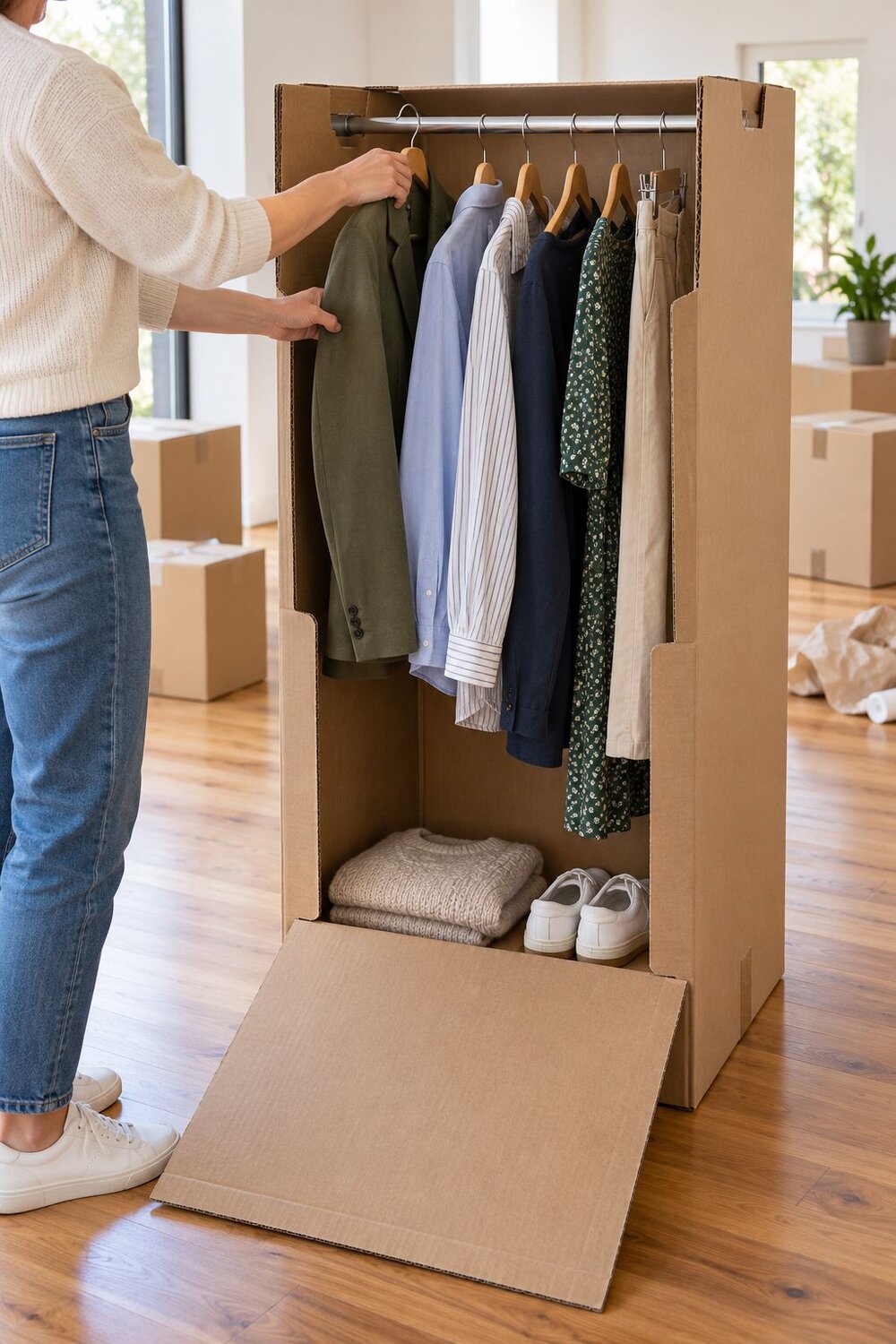
Here is the fact that should decide how you pack your wardrobe. A port-a-robe holds 257 litres, which is roughly the same space as five medium cartons (Instamove packing materials range). Fill one with hanging shirts and most of what you have loaded onto the truck is air.
On a local move that does not matter, because you are paying for time and a port-a-robe is the fastest thing in the house to fill. On an interstate move it matters a great deal, because you are paying for the space itself.
Almost every guide to this topic tells you to use wardrobe boxes without ever mentioning that. This one starts there.
First, work out how you are being charged
This is the question that changes every other answer on this page, and no competing guide asks it.
| Local move | Interstate move | |
|---|---|---|
| How it is priced | By the hour, plus crew size | By the cubic metre, plus distance |
| So volume is | Nearly free | The thing you are buying |
| So your goal is | Speed. Fewer trips, faster loading | Density. Less space used |
| Best clothes method | Port-a-robes and drawers left loaded | Fold and compress, cartons over port-a-robes |
| Worst mistake | Folding everything by hand the night before | Sending three port-a-robes of air across the country |
Most readers are on the hourly side of that table. Across 741 confirmed Instamove bookings in August 2026, 88% of moves stayed within the same state, and the typical move travelled under 10 kilometres. If that is you, hang everything and stop reading this section.
If you are crossing a border, keep going, because the next two sections are worth real money.
What a port-a-robe actually costs you in space
A port-a-robe, or wardrobe box, is a tall carton with a rail across the top. You lift clothes straight off your wardrobe rail, hang them inside, and they arrive uncreased. It is the single biggest time-saver in a bedroom.
Here is what it costs you in truck space, next to the boxes you would otherwise use:
| Box | Capacity | Roughly equivalent to |
|---|---|---|
| Small or book carton | 38 litres | The baseline |
| Medium carton | 52 litres | 1.4 small cartons |
| Large tea chest | 104 litres | 2.7 small cartons |
| Port-a-robe | 257 litres | About 5 medium cartons, or 2.5 large ones |
Now put that against the minimum volumes on an interstate move. A backload starts at a reserved volume of 10 cubic metres, so a single port-a-robe takes up roughly one fortieth of the smallest interstate booking we sell, before you have moved a stick of furniture. Three of them is closer to a tenth.
That is not an argument against port-a-robes. It is an argument for choosing deliberately:
- Moving locally? Use them freely. You are buying time, and they are the fastest packing you will do all week.
- Moving interstate with room to spare? Use one or two for the things that genuinely must not crease: suits, formal wear, tailored coats.
- Moving interstate on a tight volume? Fold almost everything and keep the port-a-robes for a handful of garments.
Port-a-robe prices and where to buy them sit in our moving boxes guide, or we can bring them with the truck as part of a move pack.
Fold, roll or hang: a chooser
The internet argues about folding versus rolling as though one wins. Neither does. The right method depends on the garment and on which side of that pricing table you are standing.
| Garment | Method | Why |
|---|---|---|
| Suits, tailored coats, formal dresses | Hang in a port-a-robe | Creasing is the whole risk and these are the hardest to press back |
| Jeans, jumpers, heavy knits | Fold flat, bottom of the carton | Dense and heavy, they form the base layer |
| T-shirts, activewear, underwear, socks | Roll tightly | Rolling fills the gaps folding leaves, and you can see everything at once |
| Silk, linen, anything you would iron | Fold with tissue between layers, pack last | Goes on top so nothing crushes it |
| Knitwear and anything that stretches | Fold, never hang | Hanging pulls wool and knits out of shape |
One rule underneath all of that: fill the gaps. A half-empty clothes carton lets everything slide and crease in transit. Clothes are the cheapest void fill you will ever have, so use them.
Which leads to the trick almost nobody uses properly. Your clothes are packing material. Jumpers and towels around a lamp base, socks inside shoes and glasses, t-shirts between plates. You protect the fragile things and pack the soft things in the same motion, and you buy less bubble wrap. Our packing tips guide covers the fragile side of that properly.
The interstate compression play
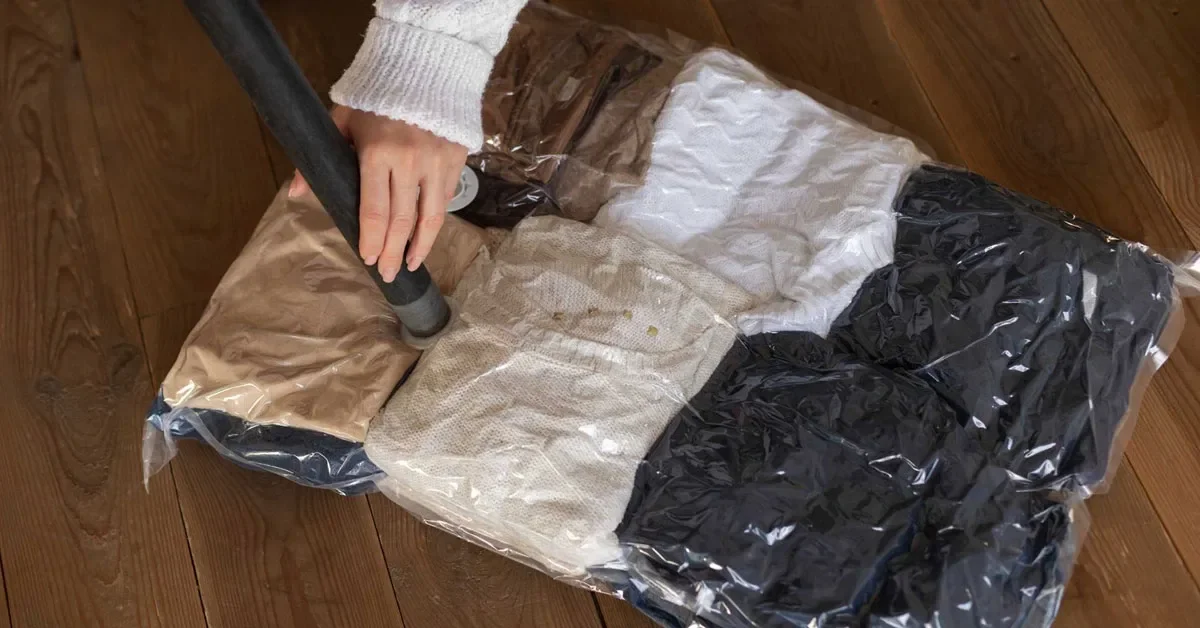
If you are paying by the cubic metre, compression is the only lever that genuinely changes the bill, and vacuum bags are the obvious tool. Squeeze the air out of the doona, the winter coats and the spare bedding and you can take a visible bite out of your volume.
Three cautions before you buy a pack of them:
- Compressed clothes are heavier per box, not lighter. You have removed air, not weight. A vacuum bag of winter coats inside a large carton can be a genuinely difficult lift, so weigh it as you go — the last thing you need is a few physio sessions because your clothes box was overweight.
- Down and wool do not enjoy being squashed for a week. For a two-day run it is fine. For a long-haul move plus a stint in storage, loft can be slow to come back.
- Everything comes out creased. That is the downside. Do not vacuum-bag anything you want to wear in the first week.
Use them for bulk and bedding, not for your work wardrobe. And if the truck has spare capacity on your route, ask before you bother: sometimes the volume you would save is not worth an afternoon with a vacuum cleaner.
Clothes are the safest thing you will ever pack yourself
Worth saying plainly, because it cuts against the advice on most of this page's competitors.
Our accidental damage cover, like most removalists', excludes the contents of any box not packed by one of our packers. That exclusion matters enormously for glassware and electronics. For clothes it barely matters at all, because a carton of folded jumpers is close to unbreakable.
So while pre-move packing was booked on only about 1% of our long-haul jobs over the past year, that is not the worry for a wardrobe that it is for a china cabinet. Pack your own clothes with a clear conscience. If you want help, it is worth buying for the kitchen first.
If you would rather hand the whole job over, our packing service can do selected rooms, and boxes packed by our team are covered.
Damp clothes and a sealed box
This is the one genuine way to ruin clothes in an Australian move, and it is almost never mentioned.
An interstate move can spend several days in transit. A sealed carton of slightly damp clothes, sitting in a truck in Australian heat, is a mildew experiment. Gym gear that went in faintly sweaty, a beach towel from the weekend, anything off the line that was not quite dry.
The fix is unglamorous:
- Everything goes in bone dry. If in doubt, give it another hour on the line or ten minutes in the dryer.
- Wash and fully dry anything worn recently, especially activewear and swimmers.
- Do not seal damp shoes. Stuff them with paper, which absorbs moisture and holds their shape at the same time.
- Leave the last load out. The laundry you run on moving-day eve travels loose in the car, not sealed in a box.
Heat is worth a thought generally. A truck parked in the sun gets very hot, so anything with wax, glue or elastic in it is happier in the car with you.
Shoes, bags and the things that are not quite clothes
These come out of the same wardrobe and get handled worst.
- Shoes go in their own carton, not on top of clothes. Soles are dirty and heels are sharp.
- Stuff every shoe. Paper inside keeps the shape and absorbs damp. Socks work if you are short of paper, and it packs two things at once.
- Bags get stuffed too, then wrapped so hardware does not scratch leather.
- Belts roll, and sit down the side of a carton where they fill an awkward gap.
- Hats need a rigid box of their own. Nothing else keeps a brim.
- Anything with real value comes with you. Watches, good jewellery and designer pieces belong in the car, for reasons our valuables guide explains.
The wardrobe you should not move at all
Every guide opens with decluttering, and every reader skips it. Here is the version with a number attached.
If you are moving interstate, you are paying for volume. Five medium cartons of clothes you will not wear again is roughly one port-a-robe of paid-for air crossing the country. The cheapest box you will ever pack is the one you do not.
A fast pass, rather than a Sunday-afternoon project:
- Anything not worn in two summers or two winters. Full seasonal cycles, not months.
- Anything needing repair you have not done by now. You will not do it in the new house either.
- Duplicates. You do not need nine black t-shirts, and you know which three you actually wear.
- Anything that does not fit right now. Moving it does not make it fit.
Donate what is good, textile-recycle what is not. Do it before you count boxes, so your quote reflects what you are actually taking.
When you have a number, get a quote. It takes a couple of minutes, and a $20 deposit holds the date on a local move.
FAQ
What is the best way to pack clothes when moving?
It depends on how you are being charged. On a local move, billed by the hour, hang everything in port-a-robes because speed is what you are paying for. On an interstate move, priced by the cubic metre, fold and compress instead, because a port-a-robe holds 257 litres and most of it is air. Fold heavy items flat at the bottom, roll light ones into the gaps, and keep anything that creases badly for the top.
Should I use wardrobe boxes or port-a-robes?
On a local move, yes, without hesitation. They are the fastest packing in the house and you are paying for time. On an interstate move, use them sparingly for suits, coats and formal wear, because each one takes about the same truck space as five medium cartons and you are paying for that space. A tight interstate volume is the one case where folding beats hanging.
Is it better to roll or fold clothes when moving?
Both, for different garments. Fold jeans, jumpers and anything heavy or structured, and lay them flat at the bottom of the carton. Roll t-shirts, activewear, underwear and socks, because rolled clothes fill the awkward gaps that folding leaves and you can see everything at a glance. Fold delicates with tissue between the layers and pack them last, on top.
Do vacuum bags work for moving clothes?
They work well for bulk: doonas, winter coats, spare bedding. They genuinely reduce volume, which matters on an interstate move priced per cubic metre. Three catches. The box gets heavy, because you removed air rather than weight. Everything comes out creased. And down and wool can be slow to recover their loft after days compressed, so keep those for shorter trips.
Can I leave clothes in the drawers when moving?
Ask your removalist first, because policies differ and a loaded chest of drawers is heavy and awkward. Where it is allowed it saves real time on a local move. Remove the drawers and carry them separately so the frame is lighter, secure anything that could slide out, and never leave valuables or liquids inside.
How do I stop clothes creasing in a move?
Hang the things that crease worst, in a port-a-robe, and keep them for last on and first off. For folded clothes, fill every gap in the carton so nothing slides in transit, and put anything delicate on top rather than under weight. Tissue between layers helps on silk and linen. Do not vacuum-bag anything you want to wear in the first week.
How should I pack shoes for a move?
Give shoes their own carton rather than putting them on clothes, since soles are dirty and heels are sharp. Stuff each shoe with paper to hold its shape and absorb any damp, or use socks and pack two things at once. Keep pairs together, wrap anything with delicate leather, and make sure everything is clean and fully dry before it is sealed.
Will my clothes be damaged in a moving truck?
Rarely, which is why clothes are the one thing worth packing yourself. The real risk is not breakage, it is damp. A sealed carton of slightly damp clothes crossing the country in summer heat can arrive smelling of mildew. Make sure everything goes in bone dry, leave the final laundry load to travel loose in your car, and stuff damp shoes with paper.


