
How to Move a Fridge, TV, and Other Fragile Items Interstate
Picture this: you've just finished a gruelling two-day interstate move, the truck pulls away, and you open a box to find your grandmother's crystal in pieces. Or you plug in the TV and the screen is cracked clean through. It happens more than it should — and it's almost always preventable.
Fragile items need to be treated differently on interstate moves than on local ones. A cross-town job might take 90 minutes in the truck. A move from Brisbane to Melbourne could mean two or three days on the road, multiple depot transfers, and serious temperature swings along the way. The physics change. Your packing approach needs to match.
This guide gives you clear, step-by-step instructions for every major fragile item — fridge, TV, glassware, artwork, electronics — so you know exactly what to do. And exactly when to hand it over to the professionals.
Why interstate moves are harder on your breakables
It's not just the distance. Three specific factors make interstate transport tougher on fragile items than any local move:
| Risk factor | Why it matters |
|---|---|
| Extended vibration | Hours — sometimes days — of road vibration loosen components, shift items inside boxes, and create micro-fractures in glass and ceramics that only become visible once you unpack. |
| Temperature swings | Australian linehaul routes cross serious climate zones. A fridge loaded in cool Melbourne can sit in 40°C heat crossing the Nullarbor. Electronics and adhesives both react badly to these swings. |
| Multiple handling points | While the bulk of our moves are direct from pickup to dropoff, it's common elsewhere for interstate freight to move through depot transfers. Every additional load and unload is another opportunity for impact damage that a direct local move simply doesn't have. |
Understanding these risks is the first step to preventing them. Let's get into each item type.
How to move a fridge interstate
The fridge is the most asked-about item in every interstate move — and for good reason. Get it wrong and you're not just looking at a scratched finish. You're looking at compressor failure and a costly replacement.
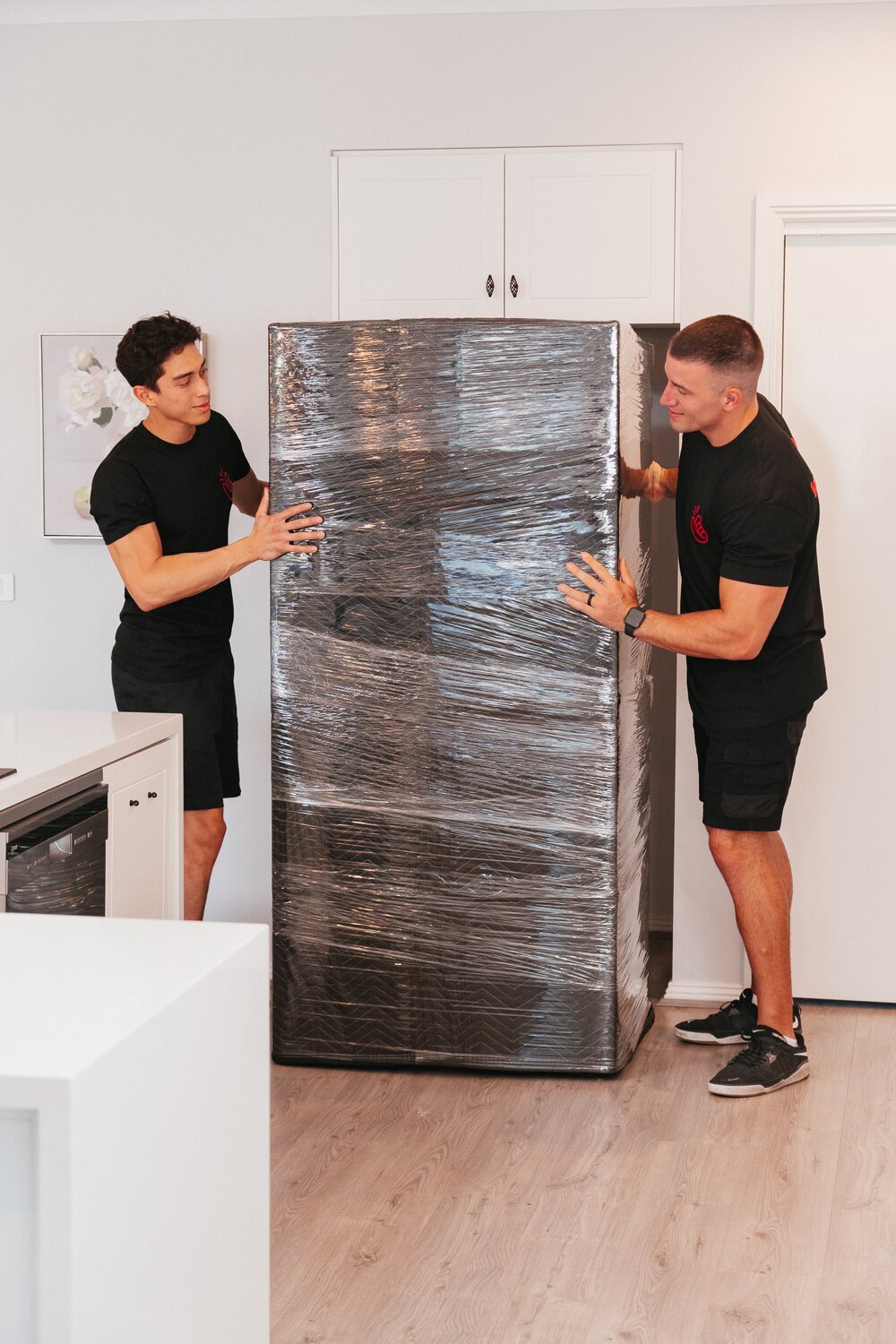
- Empty and defrost (24–48 hours before moving day). Remove every shelf, drawer, and food item. Unplug the fridge at least 24 hours out. Lay towels at the base to catch meltwater, and leave both doors open so it can defrost completely and air out.
- Clean and dry every surface. Wipe down the interior with warm water and baking soda, then dry everything thoroughly. A fridge sealed with residual moisture will develop mould during a multi-day transit.
- Secure internal components. Remove glass shelves and drawers. Wrap each one individually in bubble wrap and pack them in a separate, clearly labelled box. Tape the fridge doors shut with painter's tape — not packing tape, which can damage the finish. Coil the power cord and secure it to the back.
- Wrap the exterior. Wrap the entire fridge in transit blankets or removalist pads. Secure with packing straps (not tape directly on the surface) or shrink wrap for smaller fridges. This protects against scratches and minor impacts throughout loading and the journey.
The non-negotiable rule — always transport a fridge upright. Laying a fridge on its side allows compressor oil to flow into the cooling lines, and running the compressor with oil in the lines causes permanent mechanical failure. If a brief tilt is unavoidable, keep it under 45 degrees and as short as possible.
After delivery — settling time. Once the fridge arrives, leave it standing upright and unplugged for at least 4 hours before switching it on. If it was tilted at any point during the move, extend that wait to 24 hours. This gives the compressor oil time to drain back where it belongs.
Fridge moving supplies checklist
- Transit blankets or removalist pads (minimum 3)
- Ratchet-buckle packing straps (2)
- Painter's tape (1 roll)
- Bubble wrap for shelves and drawers
- Appliance dolly with strap
- Towels for defrost meltwater
- Baking soda for cleaning
How to move a TV interstate
Modern flat-screen TVs look solid. They're not. The large panel flexes under vibration, and a single pressure point can crack the screen from the inside out — without any external sign of damage until you turn it on.
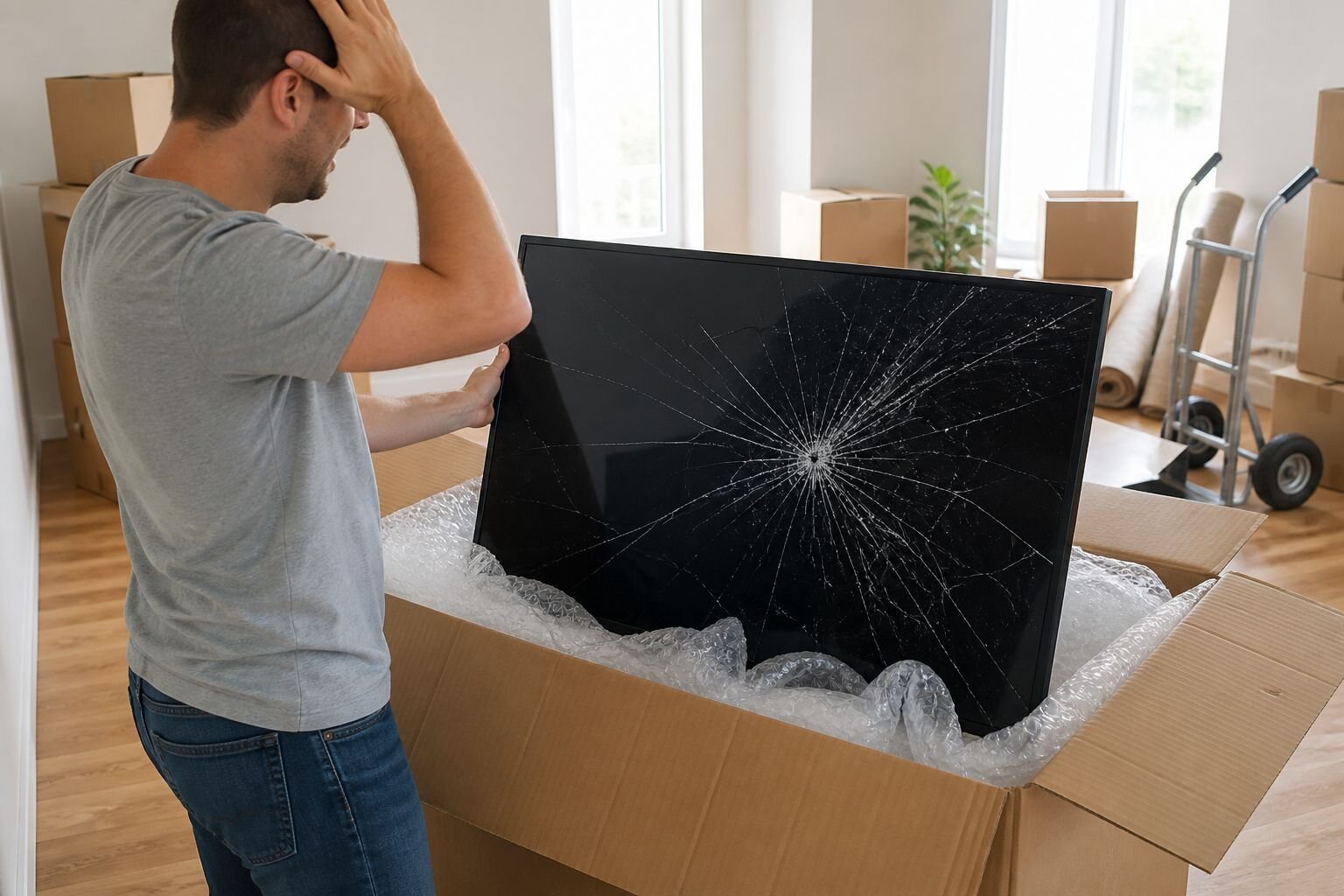
- Use the original box — seriously. If you kept the original packaging, use it. The foam inserts are engineered for your exact TV dimensions and distribute force evenly across the frame. No improvised solution comes close.
- No original box? Build a custom shield. Wrap the screen in a soft microfibre cloth or foam sheet first. Add a full layer of bubble wrap. Then place a rigid piece of cardboard or foam board flat against each side of the screen. Slide the whole assembly into a purpose-made TV shipping carton (available at Bunnings or dedicated box retailers) or the flattest, snuggest box you can find.
- Transport upright — screen facing inward. A flat TV in transit acts like a drum skin: every bump transmits force directly through the panel. Upright orientation lets the frame absorb vibration instead of the screen. Face the screen toward the truck wall, away from the load.
- Immobilise it in the truck. Strap the TV box upright between two soft, stable items — mattresses are ideal bookends. Never stack anything on top of a TV box. Mark the box "FRAGILE — SCREEN — THIS SIDE UP" on all visible faces.
- Let it acclimatise after delivery. Give the TV at least 2 hours at room temperature before plugging it in. Condensation from temperature changes during transit can short-circuit internal components if you're too hasty.
TV moving supplies checklist
- Original box and foam inserts (best option) or TV shipping carton
- Microfibre cloth or foam sheet
- Bubble wrap
- Rigid cardboard or foam board (2 pieces, screen-sized)
- Packing tape
- "FRAGILE" labels or marker
- Ratchet straps for securing in the truck
How to move glassware and ceramics interstate
Glassware is the most commonly damaged category in interstate moves. The culprit is almost always the same: pieces making contact with each other during transit. The fix is individual wrapping and zero contact between pieces.

- Use cell boxes for glasses and stemware. Cell boxes (divided cartons with cardboard partitions) are the gold standard. Each glass sits in its own compartment with zero contact with its neighbours. You can find them at most moving supply stores or ask your removalist.
- Wrap every single piece individually. Use unprinted packing paper — not newspaper. The ink from newspaper transfers onto glass and ceramics and is a nightmare to clean. For stemware, give the stem its own extra layer of wrapping. Stuff the inside of hollow items with crumpled paper to stop them collapsing under pressure.
- Cushion the box on all six sides. Line the bottom with 5 cm of crumpled packing paper before loading anything. Pack items snugly enough that they don't shift when you gently shake the box. Fill every remaining gap. Add a 5 cm cushion layer on top before sealing.
- Keep boxes light. Keep glassware boxes under 15 kg. Heavy boxes get handled roughly. Light boxes get careful treatment. It's not just physics — it's human behaviour.
- Label everything clearly. Mark every glassware box "FRAGILE — GLASSWARE — THIS SIDE UP." On interstate moves with depot transfers, clear labelling is your best defence against rough handling.
Glassware supplies checklist
- Cell boxes with cardboard dividers
- Unprinted packing paper
- Bubble wrap for particularly delicate or valuable pieces
- Foam peanuts or void fill
- Packing tape
- "FRAGILE" labels
- Marker pen
How to move artwork and framed pictures interstate
Framed artwork combines three fragile elements: the glass, the frame and the art itself. They all need protection from impact, vibration, and moisture across a multi-day interstate journey.
- Apply painter's tape to the glass. Apply painter's tape in an X across the glass face. This isn't just superstition — if the glass does break, the tape holds the shards together and stops them from slicing through the artwork underneath.
- Use glassine or acid-free paper against the art. Place a sheet of glassine or acid-free tissue over the art surface before taping. This creates a barrier that prevents adhesive residue or packing materials from ever touching the artwork itself.
- Corner protectors and bubble wrap. Fit cardboard corner protectors on all four corners. Wrap the entire piece in bubble wrap with the bubbles facing outward — not pressing against the glass, which can leave imprints.
- Use a mirror box or telescoping carton. A mirror box is a flat, adjustable carton purpose-built for frames. Slide the wrapped piece inside and fill any gaps with foam sheets or crumpled paper so it absolutely cannot shift during transit.
- Pack and transport vertically. Think of artwork like records in a crate. Stand it upright in the truck. Never lay framed pieces flat — stacking pressure cracks glass and warps frames.
Artwork supplies checklist
- Painter's tape
- Glassine or acid-free tissue paper
- Cardboard corner protectors
- Bubble wrap
- Mirror box or telescoping picture carton
- Foam sheets for void fill
- "FRAGILE — ART — DO NOT STACK" labels
How to move electronics and small appliances interstate
Laptops, gaming consoles, printers, kitchen appliances — these are all sensitive to both impact and static electricity. One mistake that many people make is grabbing regular bubble wrap, not realising it generates static charge that can damage circuit boards.
- Back up your data first. Do this before packing anything. Hard drives can fail from impact even when powered off. If the drive survives the move but your data doesn't, you'll wish you had an external backup or cloud copy.
- Remove all detachable parts. Ink cartridges out of printers, discs out of consoles, detachable cables and accessories packed separately in labelled zip-lock bags. Loose internal components become projectiles in transit.
- Use anti-static wrapping. This is the one most people skip. Wrap electronics in anti-static bubble wrap or anti-static bags. Standard bubble wrap generates static that can damage circuit boards. The anti-static version costs a little more and is worth every cent.
- Pack snugly in double-walled boxes. Use original boxes if you have them. Otherwise, use double-walled cardboard with at least 5 cm of cushioning on all six sides. The item should not move at all when you shake the box.
- Label for heat and moisture. Mark boxes "FRAGILE — ELECTRONICS — KEEP DRY — AVOID EXTREME HEAT." On interstate routes crossing climate zones, this labelling prompts handlers to keep boxes away from truck walls exposed to direct sun.
Electronics supplies checklist
- Anti-static bubble wrap or anti-static bags
- Double-walled cardboard boxes
- Foam inserts or packing paper
- Zip-lock bags for small components and cables
- Cable ties or velcro wraps
- "FRAGILE — ELECTRONICS" labels
- External hard drive or cloud backup (do this first)
The mistakes that cause most damage (and how to avoid them)
Most interstate fragile item damage isn't bad luck. It's one of these seven avoidable errors:
- Overpacking boxes. Heavy boxes are often handled a little more roughly. Keep boxes under 20 kg for general items and under 15 kg for glassware.
- Using newspaper as wrapping. The ink transfers onto glass and ceramics and is difficult to remove. Use unprinted packing paper.
- Skipping cushioning layers. Items packed tightly but without padding on the top and bottom crack when boxes are stacked. Line every box on all six sides.
- Laying fridges or TVs flat. Both must travel upright. Horizontal transport causes compressor failure in fridges and screen damage in TVs.
- Not labelling boxes. On routes with depot transfers, unlabelled boxes get treated as general freight. "FRAGILE" labelling genuinely changes how handlers treat a box.
- Taping directly onto surfaces. Packing tape on stainless steel, painted surfaces, or screens leaves residue or causes finish damage. Use painter's tape.
- Forgetting settling time. Plugging a fridge in immediately after an interstate move can destroy the compressor. Wait at least 4 hours — 24 if it was tilted.
Professional packing vs DIY: when to hand it over
DIY packing is perfectly fine for a local move with a few boxes of books. Interstate moves with high-value fragile items are a different calculation.
Consider professional packing when:
- You have multiple large fragile items (fridge, TV, artwork) moving together
- The move crosses climate zones or involves multi-day transit
- Your items include antiques, original artwork, or anything irreplaceable
- You don't have access to anti-static wrap, cell boxes, or mirror cartons
- Your time is limited and you need packing done efficiently
Instamove's professional packing service includes transit blankets, custom crating for artwork, and appliance-specific handling. Every item is inventoried and tracked from pickup to delivery. Learn more about our professional packing service.
Frequently asked questions
How long should a fridge sit before turning on after a move?
At least 4 hours if it stayed upright throughout. If it was tilted at any point during the move, wait a full 24 hours. That time allows the compressor oil to settle back into the correct position before you run the motor.
Can you lay a fridge on its side to move it?
No. Laying a fridge on its side causes compressor oil to flow into the cooling lines, which can permanently damage the compressor. Always transport a fridge upright, no exceptions.
Is bubble wrap or transit blankets better for fragile items?
Different tools for different jobs. Bubble wrap is best for small, irregularly shaped items like glassware. Transit blankets are better for large flat surfaces like fridges and furniture, where you need scratch protection without creating pressure points.
How do you pack a TV without the original box?
Wrap the screen in a soft cloth, then bubble wrap. Add rigid cardboard flat against both sides of the screen. Slide into a TV shipping carton (available from box retailers or Bunnings) or the flattest, most snug box you can find. Transport upright, screen facing the truck wall — never flat.
How much does professional packing cost for an interstate move?
Typically $300 to $800, depending on volume and item complexity. For high-value or irreplaceable items, the cost is almost always justified by the protection it provides.
What fragile items should you never pack yourself?
Antiques, original artwork, large flat-screen TVs, and wine collections are best left to professional packers. These items need specialised materials and handling techniques that most households simply don't have on hand.
Your interstate fragile items master checklist
Run through this before moving day:
Fridge
- Defrosted, cleaned, and completely dry
- Shelves and drawers removed, wrapped, and packed separately
- Doors taped shut with painter's tape
- Wrapped in transit blankets and strapped
- Upright transport confirmed with your removalist
TV
- Original box used, or custom-wrapped with cardboard shield
- Transported upright, screen facing inward
- Strapped between soft items
- "FRAGILE" labelled on all visible faces
Glassware
- Every piece individually wrapped in unprinted paper
- Cell boxes used
- Each box under 15 kg
- 5 cm cushioning on top and bottom of each box
Artwork
- Painter's tape X on glass
- Corner protectors fitted
- Bubble wrapped and in mirror box
- Transported vertically
Electronics
- Data backed up before packing
- Detachable components removed and packed separately
- Anti-static wrapping used
- Double-walled box with full cushioning
Before you go
- Timestamped photos taken of every fragile item
- Every fragile box marked "FRAGILE" with item type and correct orientation
Ready to move your fragile items interstate?
Instamove specialises in interstate relocations across Australia, with dedicated fragile item handling for fridges, TVs, artwork, and everything in between — professional-grade packing materials, custom crating, and careful handling so your valuables arrive in the same condition they left.
Get a free interstate quote

