
Senior Downsizing Checklist Australia, Room-by-Room Guide for 2026
A good senior downsizing checklist starts with the new home's floor plan, works one room at a time, and puts money and paperwork alongside the boxes. Where possible, start six to twelve months out, but a shorter runway is fine. Decide what fits first, then sort, sell, donate and pack. Book your removalist once settlement is confirmed.
More than half of Australians aged 55 and over have either downsized or seriously considered it (55%), according to AHURI's survey of 2,422 older Australians. If that's you, you're in very good company, and you don't have to do it all at once.

What does downsizing involve for seniors?
Downsizing means moving to a smaller, easier-to-manage home and deciding what comes with you. It's part logistics project, part farewell to a house full of memories.
AHURI's research shows the reasons are mixed, not just financial. Among Australians aged 55 and over who had downsized, the main reasons were:
- Lifestyle: 27%
- Financial outcomes: 27%
- Too much garden or property maintenance: 18%
- Being forced to move: 15%
AHURI also found that 40% of people considering a downsize would likely move if suitable housing were available where they wanted to live. So finding the right place often takes longer than the packing.
How far ahead should you start?
Where possible, start six to twelve months before your move, but if you're closer than that, don't panic. A shorter runway just means doing the same steps in a tighter order, and we hold good last-minute availability.
Here's a timeline you can stretch or squash to fit.
| When | What to do | Why it helps |
|---|---|---|
| 12 months out | Research and tour retirement or over-50s living options in the area you'd like to live. | Many villages are currently under construction, and buying off the plan can be cheaper. The build process can be 8 to 9 months. |
| 6 to 12 months out | Get the new home's floor plan and measure your big pieces. Start with the spare room, linen cupboard and shed. | Easy rooms build momentum before the emotional ones. |
| 3 months out | Do a second pass on every room. List what you'll sell or gift. Talk to family about heirlooms. Ask removalists for quotes. | Decisions made early are calmer decisions. |
| 6 weeks out | Book your removalist. Sell or donate the "not coming" pile. Pack the rooms you rarely use. | Seldom-used rooms won't be missed. |
| 2 weeks out | Pack everyday rooms. Set up mail redirection. Arrange utilities. Check scripts with your pharmacist. | Admin done now means no scramble later. |
| Moving week | Label boxes by room in the new home. Pack a first-night bag. Confirm times with the crew. | The first night is much nicer with the kettle at hand. |
| First week | Make the bed, set up the kitchen and bathroom, then stop. Everything else can wait. | You're allowed to rest. |
If you're short on time, our packing service can pack whole rooms for you, and our packing tips cover the rest.
How do you decide what to keep?
Start with the floor plan, not the cupboards. Measure the new home first, so every decision has a clear yes or no: it fits, or it doesn't.
Then run each item through three questions:
- Do I use it?
- Does it fit the new home?
- Would someone I love want it now?
Here's how that plays out room by room.
| Area | Keep if | Let go if |
|---|---|---|
| Furniture | It fits your floor plan and is comfortable to get in and out of. | It's a second dining table, a spare wardrobe or anything you walk around. |
| Kitchen | You cook with it weekly. | It's the fourth casserole dish or a gadget still in its box. |
| Clothes and linen | It fits, flatters and gets worn. | It's been waiting for the "right occasion" for years. |
| Books and papers | You'll reread it or need it for tax, legal or health records. | It can be borrowed from a library or found online. |
| Photos and keepsakes | It makes you smile. | It's a duplicate. Photograph the rest, or scan them. |
| Garage and shed | You'll use it in the new space. | The new home has no garage. |
For the "maybe" pile, try this: box it, label it "maybe" with today's date, and tuck it in a corner. If the box is still sealed in three months, the answer is probably no.
What do you do with the things you're not taking?
Give things a good home and the letting go gets easier. Your options, roughly from most to least satisfying:
- Gift it now. Seeing a grandchild use your old desk beats it sitting in a shed.
- Sell it. Online marketplaces suit furniture. Specialist dealers and auction houses suit antiques, silver and art.
- Donate it. Many charities collect larger items, so ask when you book.
- Recycle or dispose of it. Check your council's hard waste booking system early, as slots can fill up. A local hard waste pickup is usually the cheapest option if you can arrange one. If not, Instamove can also take unwanted items to your local tip for you. Check with your local tip first for anything they won't accept, such as paint or chemicals.
- Photograph it. A photo of Mum's sewing machine keeps the memory without the machine.
A "pick what you'd like" afternoon with family can turn a stressful job into a lovely one. Pour the tea, set a rule that nobody argues, and let people choose.
What money and paperwork should you sort before you sell?
Get the rules in front of you before you sign anything, because a few of them have deadlines. This is general information only, not financial advice, so check your own situation with Services Australia, the ATO or a licensed adviser.
| Topic | The key rule | Source |
|---|---|---|
| Downsizer super contribution | You must be 55 or over, and you (or your spouse) must have owned the home for 10 years or more. Each eligible person can contribute up to $300,000 from the sale proceeds. | ATO |
| Age Pension assets test | Sale proceeds you plan to put toward a new home can be exempt from the assets test for up to 24 months, with a further extension possible, for homes sold from 1 January 2023. | Services Australia |
Beyond those, a short admin list helps. Let these people know your new address:
- Services Australia (Centrelink and Medicare)
- Your super fund and bank
- Your GP, specialists and pharmacy
- Your council, electricity, gas, water and internet providers
- Your My Aged Care or Support at Home provider, if you receive services
A change of address checklist covers the full list. Stamp duty and other upfront costs also vary by state, so ask your conveyancer for the numbers early.
How can family help a parent downsize without taking over?
Let them make the decisions. Your job is hands, vehicles and patience.
AHURI's earlier research found that 26% of older Australians who had moved found the process difficult, mainly because of limited suitable housing, cost and location. The emotional side is real too. A few things help:
- Start with the easy rooms. Linen cupboard before lounge room, garage before the photo albums.
- Work in short sessions. Two hours with a cuppa beats a full-day marathon.
- Ask, don't tell. "Where would this look good in the new place?" lands better than "Do you really need this?"
- Keep the stories. If an item has a tale, write it down or record it on your phone before it goes.
- Save the sentimental stuff for last. By then the momentum is built and the new home feels real.
If your parent is moving a long way, say to be near family or to the coast, ask about interstate options. A consolidated load or backload can be significantly cheaper if the dates are flexible. See our backloading page for how it works.
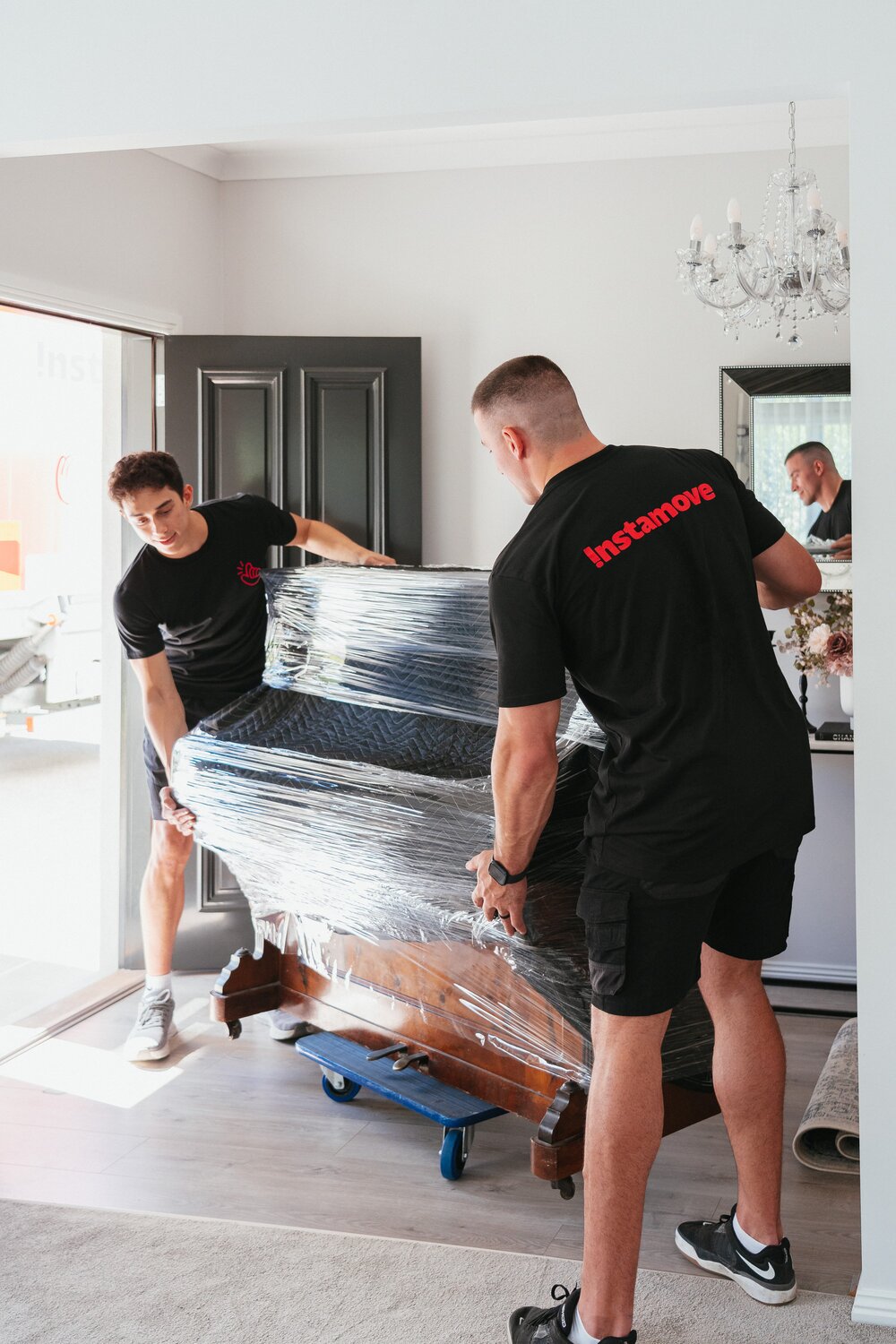
How do you make moving day easier on the body and the nerves?
Plan the day around energy, not the clock. Decide who is looking after you, so you can sit down and let the crew work.
Some practical touches:
- Pack an essentials bag and keep it with you. Medications, glasses, hearing aid batteries, chargers, phone, wallet, keys and the documents you'll need that week.
- Tell the crew about mobility needs up front. Walking frames, steps, narrow hallways and lift access all affect the plan.
- Mention medical or specialty furniture. Lift chairs and adjustable beds often need to be disassembled and reassembled, so let us know when you book.
- Clear the pathways. Move rugs, cords and clutter so nobody trips.
- Pick a quieter day if you can. In September 2026, across 644 confirmed Instamove bookings, Tuesday (13%) and Wednesday (14%) were our lightest days, while Friday and Saturday were busiest.
How do you set up your new home in the first week?
Set up the essentials first and give yourself permission to leave the rest. Here's a gentle order of play:
- Make the bed. A proper night's sleep on night one makes everything else easier.
- Set up the kitchen basics. Kettle, mugs, a few plates and the cutlery drawer.
- Sort the bathroom. Towels, toiletries and medications within reach.
- Do a safety walk-through. Add night lights, remove loose rugs, test the smoke alarms and note where the switches are.
- Redirect your mail. Do this with Australia Post and update your key accounts.
- Say hello to a neighbour. It's the quickest way to feel at home.
- Unpack one room at a time. Stop when you're tired. The boxes will wait.
Frequently asked questions
What should a senior downsizing checklist include?
It should cover the new floor plan, a sorting plan, a timeline, money and paperwork, moving day and the first week. Our checklist above has all six, and AHURI found that two-thirds of people who downsized still had spare bedrooms, so measure carefully before deciding what fits.
How far in advance should seniors start downsizing?
Six to twelve months gives you breathing room, especially if you plan to sell items or involve family. Plenty of people manage a shorter runway, and that's fine. Book your removalist once settlement is confirmed. Our large fleet means we can often help with shorter notice, too.
How do I help an elderly parent downsize?
Let them lead, and keep sessions short. Begin with the least emotional rooms, ask questions rather than giving orders, and save photos and keepsakes for last. Offer to scan photo albums so the memories travel without the boxes. Patience matters more than speed, and your parent has the final say.
Can I put the proceeds of my home sale into super?
Possibly. If you're eligible for a downsizer contribution, you generally need to contribute within 90 days of receiving the sale proceeds and give your super fund the downsizer form (NAT 75073). It doesn't count toward your usual contribution caps. Check the ATO's current rules before you act.
Does selling my home affect the Age Pension?
It can, depending on what you do with the money. Proceeds you plan to use for a new home are exempt from the assets test for a set period, with a maximum of 36 months for homes sold from 1 January 2023. Speak to Services Australia about your own circumstances.
What's the best day to move when you're downsizing?
Pick the day that gives you the most energy and the most help. Friday (20%) and Saturday (19%) were our busiest days in September 2026, so a Tuesday or Wednesday may feel calmer. Ask for your preferred day when you request a quote.
Is downsizing usually a local move?
Mostly, yes. Across 639 confirmed Instamove bookings in September 2026, 87% stayed within one state, and the median move covered about 11 kilometres. Many people downsize within their suburb to stay near friends, doctors and family.
What if I'm downsizing interstate?
Interstate is more involved, but it's very doable. If your dates are flexible, ask about a consolidated load or backload, which can be significantly cheaper.


